 by
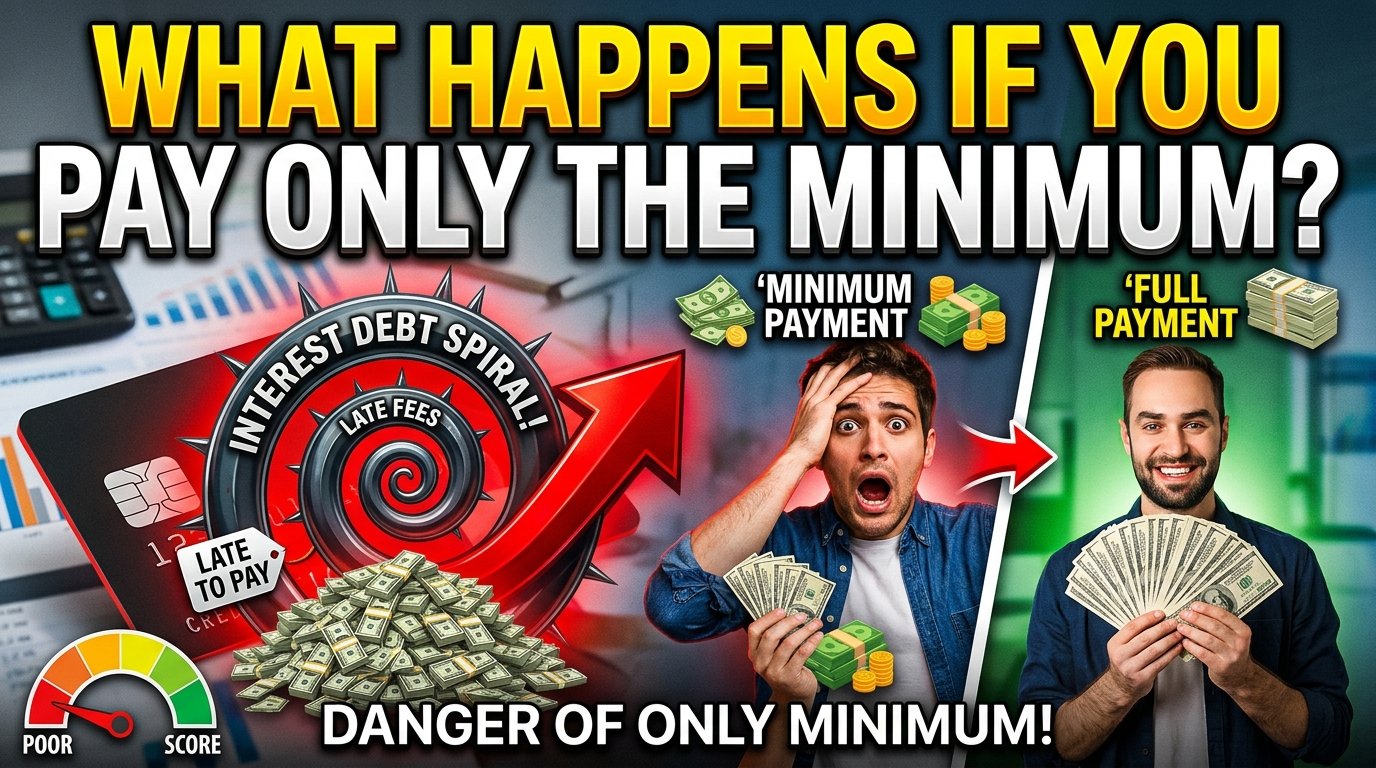
by Credit cards can be useful for everyday purchases, emergencies, and planned expenses. However, understanding how credit card payments work is important if you want to avoid unnecessary debt.
One option shown on many credit card statements is the minimum payment. It is the smallest amount you are generally required to pay by the due date to keep the account from becoming past due, according to the card’s terms.
Paying only the minimum can help you avoid being immediately considered late, but it does not mean your credit card debt is paid off. The remaining balance may continue to accrue interest, depending on your card’s terms.
So, what actually happens when you pay only the minimum amount?
What Is a Minimum Credit Card Payment?
The minimum payment is the smallest payment required for your credit card account during a particular billing cycle.
The amount is usually calculated according to the card issuer’s rules. It may include a percentage of your outstanding balance, interest, fees, or other components.
For example, imagine your credit card statement shows:
Total balance: ₹50,000
Minimum payment: ₹2,500
If you pay only ₹2,500, you have not cleared the ₹50,000 balance. The remaining amount can continue to be subject to interest and other applicable charges according to your card agreement.
The exact calculation varies between credit card issuers.
You May Keep Your Account Current
One benefit of making at least the required minimum payment by the due date is that you may avoid being treated as having missed the required payment for that billing cycle.
However, paying the minimum does not automatically mean that no interest will be charged.
This distinction is important because many people assume that making the minimum payment means they have fully dealt with the bill.
You have met the minimum payment requirement, but you may still be carrying debt.
Interest Can Make the Balance More Expensive
The biggest concern with paying only the minimum is the potential cost of interest.
When you do not pay your full statement balance, interest may be charged according to your card’s terms. The longer you carry the balance, the more interest can potentially accumulate.
For example, if you repeatedly make only small payments while continuing to use the card, your balance may take a long time to decrease.
This is why a credit card purchase that initially seems affordable can become much more expensive when repayment is stretched over many months.
Your Debt May Take Longer to Pay Off
Minimum payments are designed to keep an account from becoming delinquent, not necessarily to help you eliminate the balance quickly.
Consider a simplified example:
| Payment Strategy | Possible Result |
|---|---|
| Pay full statement balance | Balance can be cleared each billing cycle |
| Pay more than minimum | Debt can decrease faster |
| Pay only minimum | Balance may remain for a long period |
| Pay less than required | Account may become past due |
The actual repayment period depends on your balance, interest rate, fees, and whether you continue making new purchases.
Continuing to Use the Card Can Make Things Worse
Paying the minimum becomes particularly risky when you continue making new purchases.
Suppose you owe ₹40,000 and pay a ₹2,000 minimum payment. Then you spend another ₹5,000 during the next billing cycle.
Your balance may not decrease as much as you expect because new spending is being added while interest and applicable charges may also accumulate.
This creates a cycle where you make payments but continue carrying significant debt.
If you are trying to reduce your balance, consider limiting new credit card spending until the debt is under control.
Your Credit Utilization May Stay High
Credit utilization generally refers to how much of your available revolving credit you are using.
For example, if your credit limit is ₹1,00,000 and your balance is ₹60,000, your utilization is 60%.
A high utilization ratio can affect credit scores under some scoring models. It can also indicate that you are relying heavily on available credit.
Paying only the minimum may keep your balance relatively high, especially if you continue using the card.
Reducing the outstanding balance can therefore be helpful for both your finances and your overall credit profile.
Minimum Payments Can Create a False Sense of Security
Because the minimum payment is often much smaller than the total balance, it can make a large debt look manageable.
For example, seeing a ₹2,000 minimum payment on a ₹50,000 balance may feel easier than seeing the full ₹50,000 amount.
But the remaining ₹48,000 does not disappear.
This is why you should always look at both numbers:
Minimum payment = amount required now
Statement balance = amount you owe for the billing cycle
Understanding the difference can help you make better repayment decisions.
Paying More Than the Minimum Can Save Money
If you cannot pay the entire balance, paying more than the minimum can help reduce your outstanding debt faster.
For example, instead of paying only ₹2,000, you may decide to pay ₹5,000 or ₹10,000 if your budget allows.
A larger payment reduces the balance more quickly, which can potentially reduce future interest costs.
However, do not sacrifice essential expenses or emergency savings simply to make a larger credit card payment. Choose an amount that is realistic for your financial situation.
Full Payment Is Often the Better Habit
If you can comfortably afford it, paying the full statement balance by the due date can be a strong credit card habit.
For many cards, paying the full statement balance according to the card’s grace-period terms can help you avoid interest on eligible purchases.
The exact rules vary, so check your card agreement.
Full payment also prevents the balance from building up month after month.
What If You Cannot Afford the Full Balance?
Sometimes a person may face an unexpected expense and be unable to pay the entire credit card balance.
In that situation, making at least the required minimum payment by the due date can be important to keep the account from becoming past due, subject to the card’s terms.
After that, focus on reducing the balance as quickly as your budget reasonably allows.
You can also contact your card issuer to ask whether any repayment assistance or alternative arrangements are available.
Ignoring the bill is generally worse than communicating with the issuer and making a plan.
Check Your Credit Card Statement Carefully
Your statement can tell you exactly what you need to know about your account.
Before making a payment, check:
- Total statement balance
- Minimum payment
- Payment due date
- Interest charged
- Fees
- Recent purchases
- Previous payments
- Available credit
If you notice an unfamiliar transaction or unexpected fee, contact your card issuer through its official support channels.
Avoid Using Minimum Payments as a Spending Strategy
A credit card should not be used with the idea that you will always pay only the minimum.
Before making a purchase, ask yourself whether you can afford to repay it without creating long-term debt.
Rewards and cashback are not a good reason to make purchases you cannot afford.
Even a card offering attractive rewards can become expensive if interest charges continue to accumulate on an unpaid balance.
Simple Ways to Reduce Credit Card Debt
If you are currently paying only the minimum, consider creating a simple repayment strategy.
Start by stopping unnecessary credit card purchases. Then determine how much extra you can realistically pay each month.
You can also prioritize the card with the highest interest rate if you have balances on multiple cards, while continuing to make at least the required minimum payments on the others.
The exact strategy should match your financial situation.
Final Thoughts
Paying only the minimum amount on your credit card can keep your account from becoming past due when the payment is made on time and meets the issuer’s requirements. However, it does not eliminate your debt.
The remaining balance may continue to accrue interest, and repeated minimum payments can make it take much longer to repay what you owe.
If your budget allows, paying the full statement balance is generally a better approach for avoiding unnecessary interest on eligible purchases. If you cannot pay in full, try to pay more than the minimum whenever possible and avoid adding unnecessary new debt.
The most important lesson is simple: the minimum payment is a requirement, not a repayment goal. Understanding this difference can help you keep your credit card debt manageable and protect your long-term financial health.